Plants

Tissue Culture Plants

TC plantlets in nutrient gel — acclimatizing. Deflasking and weaning into soil.

Acclimatization: from flask to soil

  1. 1Deflasking

    Carefully take the plantlet out of the bag/flask without breaking the fragile roots.

  2. 2Rinse off the gel

    Thoroughly rinse the nutrient gel (gellan gum) off the roots with warm RO/distilled water — residue causes mold and rot.

  3. 3Sterile substrate

    Plant in a loose, airy substrate: sphagnum or perlite + bark. No nutrient-rich soil.

  4. 4Mini greenhouse

    Clear box/ziplock bag, humidity 90-100%, warmth 22-26°C, diffused light. No direct sun.

  5. 5Hardening off

    Over 2-4 wk, gradually open the box a little, lowering the humidity so the plant gets used to the room.

  6. 6No fertilizer

    First 3-4 wk only water (RO). Then very weak — ¼ dose, canister V for variegated plants.

  7. 7Moving to the mix

    After rooting and 2-3 new leaves — into a mature variegated mix (TC-3 for climbing aroids, TC-4 for Alocasia).

Substrate by stage

Two stages: after deflasking, a light semi-sterile mix (climbing aroids and alocasia use different mixes), then an airy mature mix. Each plant below has its own path with the full mix composition.

Transplanting & roots — practical tips

Repot now or wait?
  • •Just arrived — let them settle for 1-2 wk in the current sphagnum, don't disturb them. Deflasking + shipping is already stress; repotting right away = a double hit.
  • •Repot earlier only if the moss has turned soggy/is rotting, there is standing water in the container, or the moss is clearly bad.
  • •When repotting — into a light deflasking mix, and back into a high-humidity container for a few more weeks, then gradually open the lid (hardening off).
  • •Mature mix — in a few months, not now.
How to remove sphagnum from tangled roots
  • •Don't pull by force — you'll tear the young roots.
  • •Soak the root ball in warm RO/distilled water for 10-20 minutes — the moss softens and comes apart on its own.
  • •Gently swish the ball in the water — softened sphagnum floats up and untangles almost effortlessly.
  • •Don't remove all the moss: sphagnum is inert and antiseptic, leftovers in the roots do no harm — you can plant with them.
  • •Several plantlets have grown tangled together — untangle them underwater, slowly; losing some roots is normal.
  • •The safest option — don't strip off the moss at all; plant the whole moss plug as is into the new substrate.

My TC plants (9)

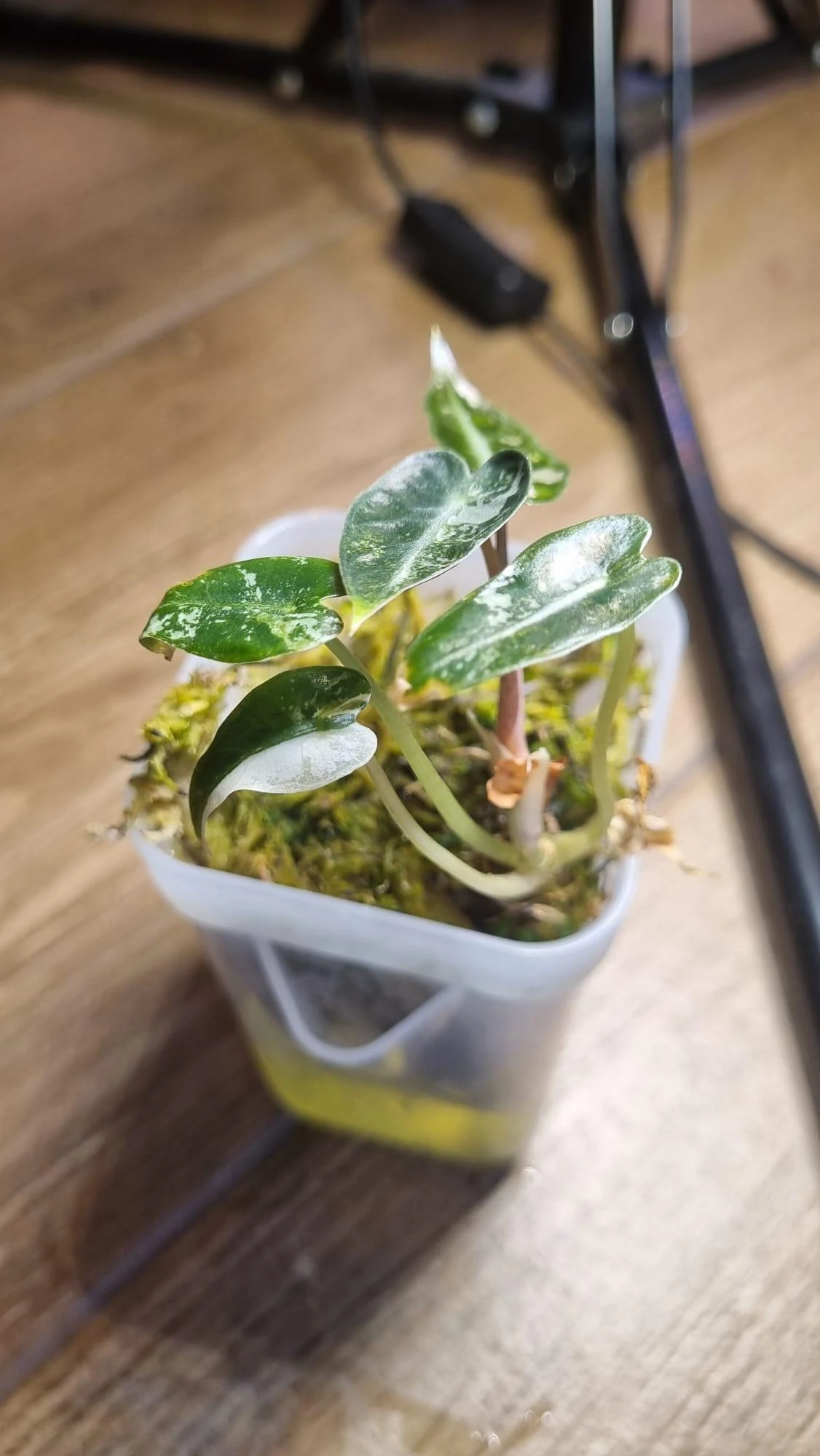
Alocasia 'Bambino' variegated (Albo) — Adult — referenceAdult — reference

Alocasia 'Bambino' variegated (Albo)

Alocasia amazonica 'Bambino Variegata'

TC Variegated
Stage
Deflasking / acclimatization
Acquired
2026-05
Source
Etsy — Tenzin Khoo, Chiang Mai (Thailand)
Phyto certificate
TH6905014524 (11.05.2026)
Substrate
After deflasking:TC-2TC deflasking — alocasia (tuberous)
  • Perlite35%
  • Semi Hydro Mix (volcanic mineral substrate)35%
  • Sphagnum moss20%
  • Charcoal10%
Adult:TC-4Variegated alocasia — mineral (adult)
  • Semi Hydro Mix (volcanic mineral substrate)40%
  • Perlite25%
  • Coarse Coconut Coir20%
  • Pine Bark10%
  • Charcoal5%
Care notes
  • •TC plantlet in gel (gellan gum) — not a finished plant, needs acclimatization
  • •Deflasking — carefully remove it and wash all the gel off the roots with warm RO water (leftovers = tuber rot)
  • •TC alocasia is finicky: keep it warm (22-26°C) and very humid, open slowly
  • •Substrate loose and airy (sphagnum/perlite), no dense soil at all
  • •NO fertilizers for the first 3-4 weeks, then very weak (sensitive group)
  • •Diffused light, no direct sun
  • •After rooting and once a small tuber forms — move to the adult mineral mix for variegated alocasia
Risks & warnings
  • White areas without chlorophyll die — variegated alocasia is especially unstable
  • The tuber rots easily from overwatering and gel residue
  • May go dormant (drop leaves) under stress — the tuber is alive
  • TC plantlets are fragile — losses during acclimatization are normal
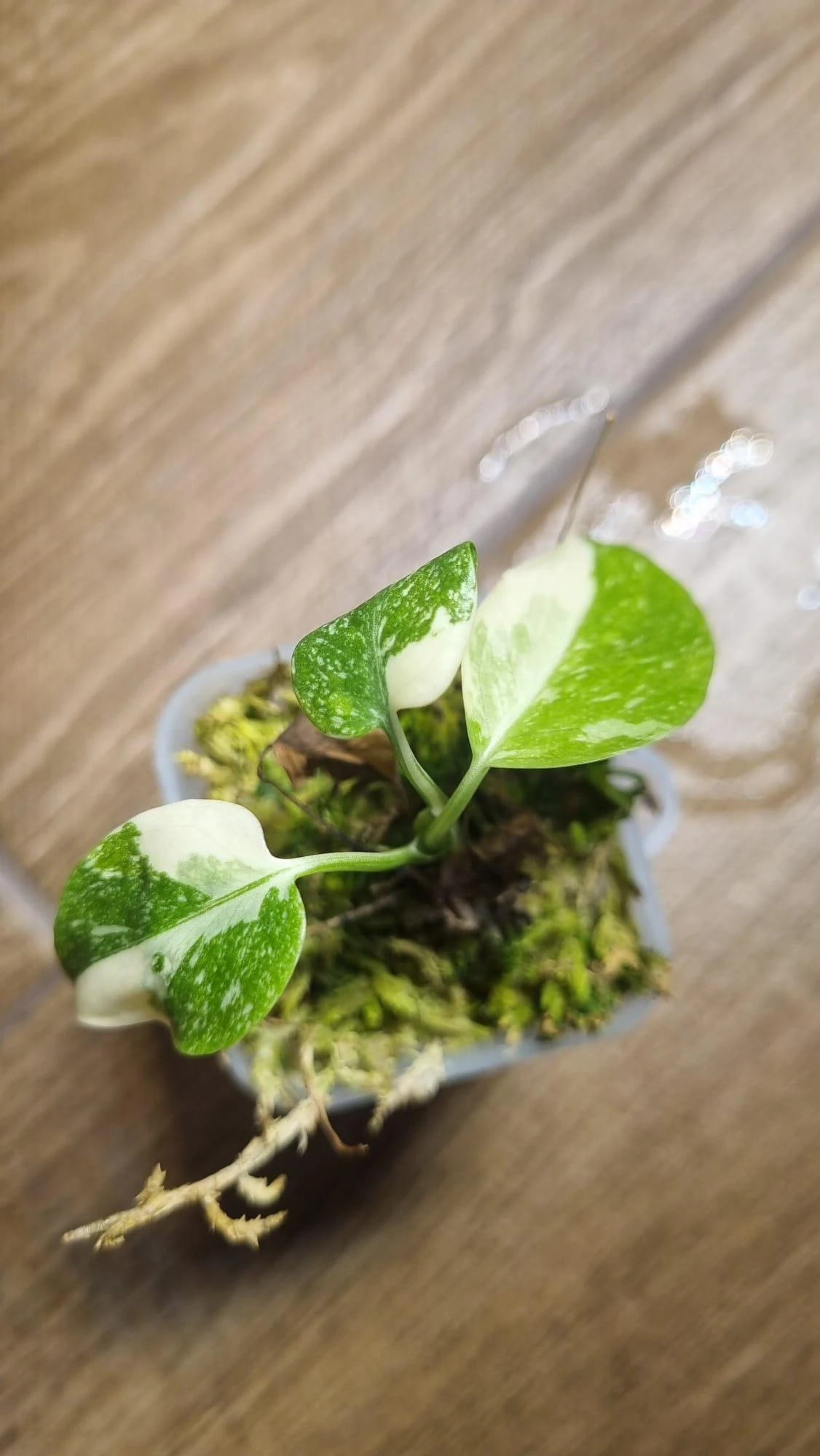
Alocasia 'Bambino' variegated (Aurea Gold)

Alocasia amazonica 'Bambino Variegata Aurea'

TC Variegated
Stage
Growing on after acclimatization
Acquired
2026-08
Source
Etsy (Thailand)
Substrate
After deflasking:TC-2TC deflasking — alocasia (tuberous)
  • Perlite35%
  • Semi Hydro Mix (volcanic mineral substrate)35%
  • Sphagnum moss20%
  • Charcoal10%
Adult:TC-4Variegated alocasia — mineral (adult)
  • Semi Hydro Mix (volcanic mineral substrate)40%
  • Perlite25%
  • Coarse Coconut Coir20%
  • Pine Bark10%
  • Charcoal5%
Care notes
  • •TC alocasia is finicky: keep it warm (22-26°C) and very humid, open slowly
  • •NO fertilizers for the first 3-4 weeks, then very weak (sensitive group)
  • •Diffused light, no direct sun
  • •The cultivar was identified from a photo and is tentative: it will be confirmed if new leaves show yellow sectors
  • •After rooting and once a small tuber forms — move to the adult mineral mix for variegated alocasia
Risks & warnings
  • White areas without chlorophyll die — variegated alocasia is especially unstable
  • The tuber rots easily from overwatering and gel residue
  • May go dormant (drop leaves) under stress — the tuber is alive
  • TC plantlets are fragile — losses during acclimatization are normal
Alocasia 'Black Velvet' variegated (Albo Pink)

Alocasia reginula 'Black Velvet Albo Pink Variegated'

TC Variegated
Stage
Growing on after acclimatization
Acquired
2026-08
Source
Etsy (Thailand)
Substrate
After deflasking:TC-2TC deflasking — alocasia (tuberous)
  • Perlite35%
  • Semi Hydro Mix (volcanic mineral substrate)35%
  • Sphagnum moss20%
  • Charcoal10%
Adult:TC-4Variegated alocasia — mineral (adult)
  • Semi Hydro Mix (volcanic mineral substrate)40%
  • Perlite25%
  • Coarse Coconut Coir20%
  • Pine Bark10%
  • Charcoal5%
Option:16Aroids — mineral, airy
  • Lava rock (volcanic scoria)17%
  • Pine Bark17%
  • Perlite17%
  • Pumice17%
  • Fine Coconut Coir32%
Care notes
  • •TC alocasia is finicky: keep it warm (22-26°C) and very humid, open slowly
  • •NO fertilizers for the first 3-4 weeks, then very weak (sensitive group)
  • •Diffused light, no direct sun
  • •Dense peat-based soil stunts young roots and slows leaf growth — the substrate should be chunkier and airier
  • •After rooting and once a small tuber forms — move to the adult mineral mix for variegated alocasia
Risks & warnings
  • White areas without chlorophyll die — variegated alocasia is especially unstable
  • The tuber rots easily from overwatering and gel residue
  • May go dormant (drop leaves) under stress — the tuber is alive
  • TC plantlets are fragile — losses during acclimatization are normal
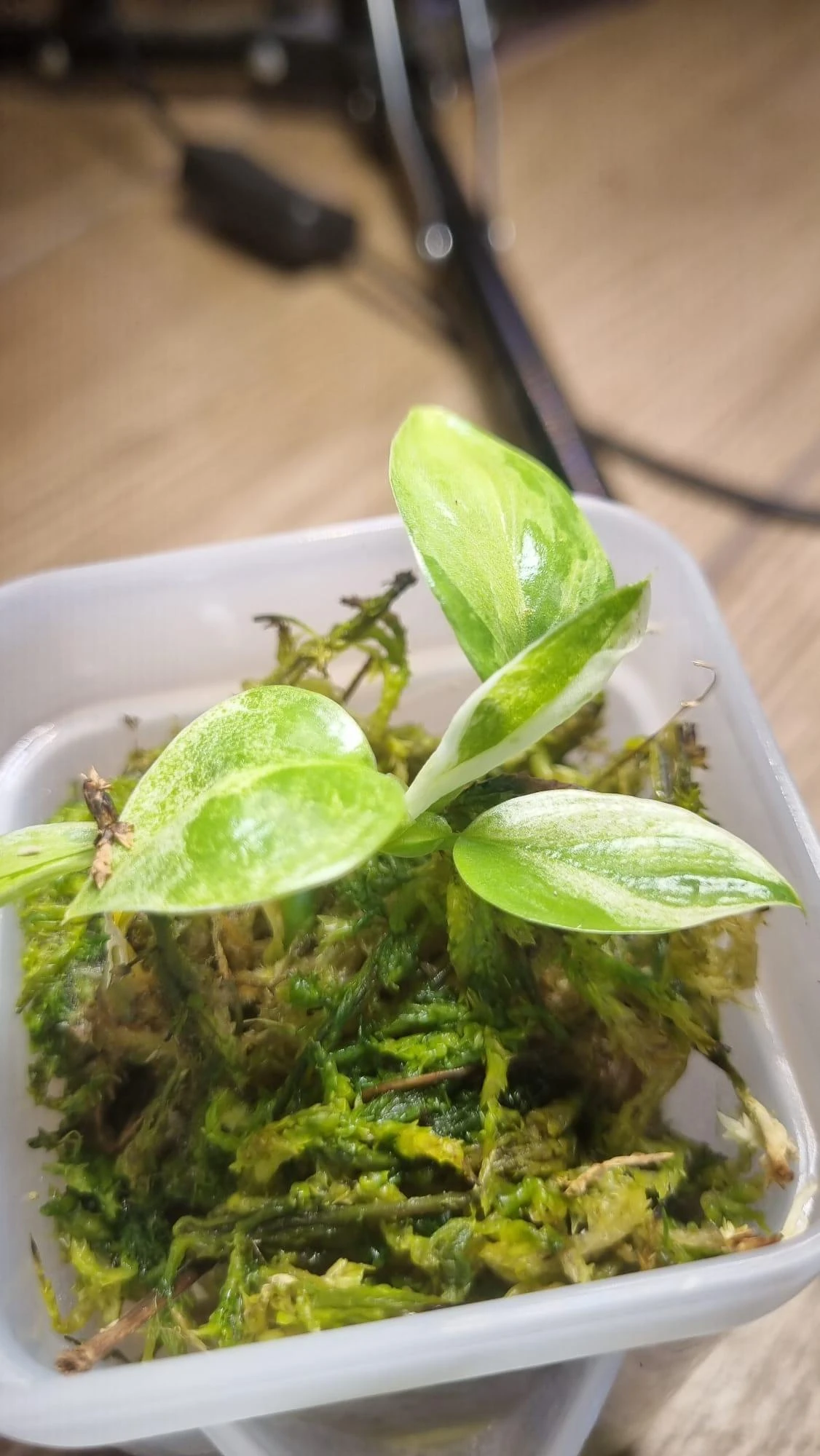
Alocasia 'Sanderiana Bull' variegated (Pink/Albo)

Alocasia sanderiana 'Bull Variegated Pink'

TC Variegated
Stage
Growing on after acclimatization
Acquired
2026-08
Source
Etsy (Thailand)
Substrate
After deflasking:TC-2TC deflasking — alocasia (tuberous)
  • Perlite35%
  • Semi Hydro Mix (volcanic mineral substrate)35%
  • Sphagnum moss20%
  • Charcoal10%
Adult:TC-4Variegated alocasia — mineral (adult)
  • Semi Hydro Mix (volcanic mineral substrate)40%
  • Perlite25%
  • Coarse Coconut Coir20%
  • Pine Bark10%
  • Charcoal5%
Option:16Aroids — mineral, airy
  • Lava rock (volcanic scoria)17%
  • Pine Bark17%
  • Perlite17%
  • Pumice17%
  • Fine Coconut Coir32%
Care notes
  • •TC alocasia is finicky: keep it warm (22-26°C) and very humid, open slowly
  • •NO fertilizers for the first 3-4 weeks, then very weak (sensitive group)
  • •Diffused light, no direct sun
  • •Dense peat-based soil stunts young roots and slows leaf growth — the substrate should be chunkier and airier
  • •After rooting and once a small tuber forms — move to the adult mineral mix for variegated alocasia
Risks & warnings
  • White areas without chlorophyll die — variegated alocasia is especially unstable
  • The tuber rots easily from overwatering and gel residue
  • May go dormant (drop leaves) under stress — the tuber is alive
  • TC plantlets are fragile — losses during acclimatization are normal
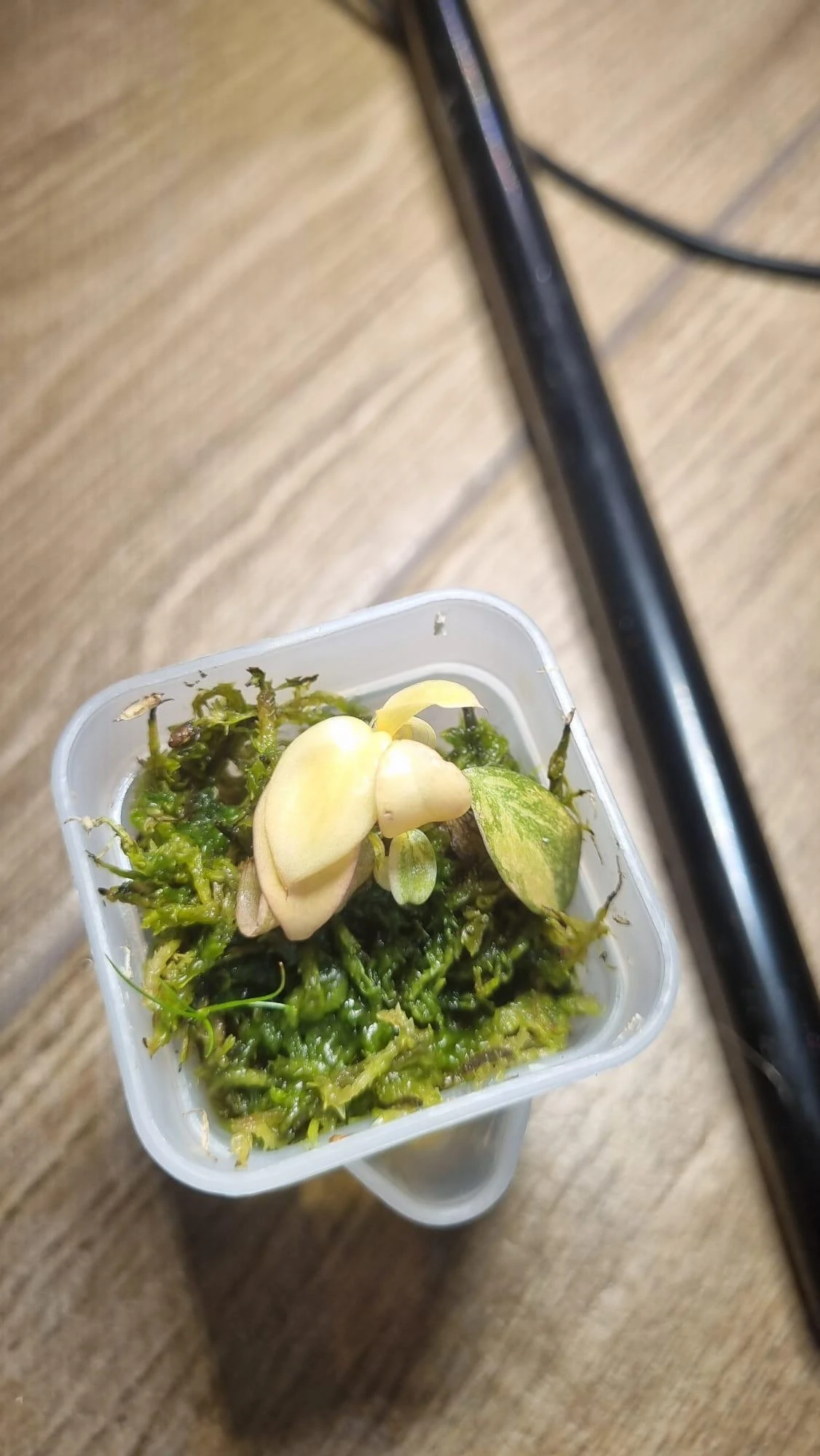
Monstera 'Borsigiana Albo' — Adult — referenceAdult — reference

Monstera 'Borsigiana Albo'

Monstera deliciosa 'Borsigiana Albo Variegata'

TC Variegated
Stage
Deflasking / acclimatization
Acquired
2026-05
Source
Etsy — Tenzin Khoo, Chiang Mai (Thailand)
Phyto certificate
TH6905014524 (11.05.2026)
Substrate
After deflasking:TC-1TC deflasking — climbing aroids (philodendron, monstera)
  • Sphagnum moss40%
  • Perlite30%
  • Coarse Coconut Coir20%
  • Charcoal10%
Adult:TC-3Variegated aroids — airy (adult)
  • Pine Bark40%
  • Coarse Coconut Coir20%
  • Perlite20%
  • Semi Hydro Mix (volcanic mineral substrate)10%
  • Charcoal10%
Option:16Aroids — mineral, airy
  • Lava rock (volcanic scoria)17%
  • Pine Bark17%
  • Perlite17%
  • Pumice17%
  • Fine Coconut Coir32%
Care notes
  • •TC plantlet in gel (gellan gum) — not a finished plant, needs acclimatization
  • •Borsigiana Albo — a compact/fast form of the same albo as Monstera albo variegata
  • •Deflasking — carefully remove it and wash all the gel off the roots with warm RO water (leftovers = mold/rot)
  • •Mini-greenhouse for 2-4 weeks with high humidity, then gradually open (harden off)
  • •NO fertilizers for the first 3-4 weeks, then ¼ dose (canister V, low N)
  • •Bright diffused light, no direct sun on the white areas
  • •After 2-3 new leaves — move to the adult airy mix for variegated aroids
Risks & warnings
  • Reversion or fully white leaves (die without chlorophyll) — keep the balance with pruning
  • White sectors burn in direct sun and easily dry out/turn black
  • Gel residue on the roots → mold/rot
  • TC plantlets are fragile — losses during acclimatization are normal
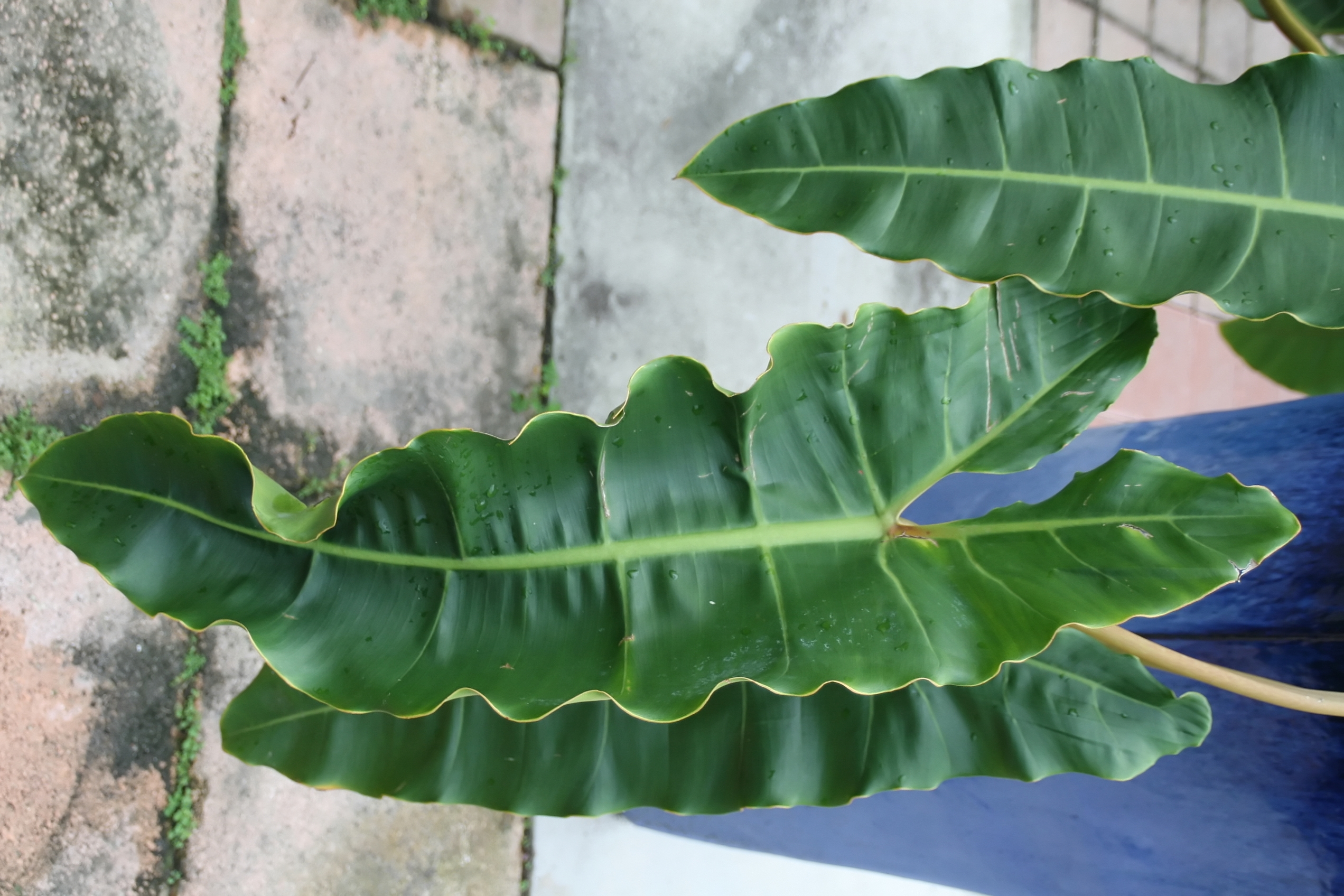
Philodendron 'Billietiae' Variegated — Adult — referenceAdult — reference

Philodendron 'Billietiae' Variegated

Philodendron billietiae 'Variegata'

TC Variegated
Stage
Deflasking / acclimatization
Acquired
2026-07
Source
Etsy (Thailand)
Substrate
After deflasking:TC-1TC deflasking — climbing aroids (philodendron, monstera)
  • Sphagnum moss40%
  • Perlite30%
  • Coarse Coconut Coir20%
  • Charcoal10%
Adult:TC-3Variegated aroids — airy (adult)
  • Pine Bark40%
  • Coarse Coconut Coir20%
  • Perlite20%
  • Semi Hydro Mix (volcanic mineral substrate)10%
  • Charcoal10%
Option:16Aroids — mineral, airy
  • Lava rock (volcanic scoria)17%
  • Pine Bark17%
  • Perlite17%
  • Pumice17%
  • Fine Coconut Coir32%
Care notes
  • •TC plantlet in gel (gellan gum) — not a finished plant, needs acclimatization
  • •Billietiae — long arrow-shaped leaves on orange petioles; a variegata with cream-yellow sectors
  • •Deflasking — carefully remove it and wash all the gel off the roots with warm RO water (leftovers = mold/rot)
  • •Mini-greenhouse for 2-4 weeks with high humidity, then gradually open (harden off)
  • •NO fertilizers for the first 3-4 weeks, then ¼ dose (canister V, low N)
  • •Bright diffused light, no direct sun — light sectors burn more easily than green ones
  • •Support (moss stick) for climbing growth and large mature leaves
  • •After 2-3 new leaves — move to the adult airy mix for variegated aroids
Risks & warnings
  • Reversion with excess nitrogen (loss of cream-yellow sectors)
  • Fully white/yellow leaves without chlorophyll die — normal for a variegata
  • Gel residue on the roots → mold/rot
  • TC plantlets are fragile — losses during acclimatization are normal

Philodendron 'Caramel Marble' variegated

Philodendron 'Caramel Marble' Variegata

TC Variegated
Stage
Growing on after acclimatization
Acquired
2026-08
Source
Etsy (Thailand)
Substrate
After deflasking:TC-1TC deflasking — climbing aroids (philodendron, monstera)
  • Sphagnum moss40%
  • Perlite30%
  • Coarse Coconut Coir20%
  • Charcoal10%
Adult:TC-3Variegated aroids — airy (adult)
  • Pine Bark40%
  • Coarse Coconut Coir20%
  • Perlite20%
  • Semi Hydro Mix (volcanic mineral substrate)10%
  • Charcoal10%
Option:16Aroids — mineral, airy
  • Lava rock (volcanic scoria)17%
  • Pine Bark17%
  • Perlite17%
  • Pumice17%
  • Fine Coconut Coir32%
Care notes
  • •Mini-greenhouse for 2-4 weeks with high humidity, then gradually open (harden off)
  • •NO fertilizers for the first 3-4 weeks, then ¼ dose (canister V, low N)
  • •Bright diffused light, no direct sun — light sectors burn more easily than green ones
  • •Support (moss stick) for climbing growth and large mature leaves
  • •After 2-3 new leaves — move to the adult airy mix for variegated aroids
Risks & warnings
  • Reversion with excess nitrogen (loss of cream-yellow sectors)
  • Fully white/yellow leaves without chlorophyll die — normal for a variegata
  • TC plantlets are fragile — losses during acclimatization are normal
Philodendron 'Jose Buono' — Adult — referenceAdult — reference

Philodendron 'Jose Buono'

Philodendron 'Jose Buono'

TC Variegated
Stage
Deflasking / acclimatization
Acquired
2026-05
Source
Etsy — Tenzin Khoo, Chiang Mai (Thailand)
Phyto certificate
TH6905014524 (11.05.2026)
Substrate
After deflasking:TC-1TC deflasking — climbing aroids (philodendron, monstera)
  • Sphagnum moss40%
  • Perlite30%
  • Coarse Coconut Coir20%
  • Charcoal10%
Adult:TC-3Variegated aroids — airy (adult)
  • Pine Bark40%
  • Coarse Coconut Coir20%
  • Perlite20%
  • Semi Hydro Mix (volcanic mineral substrate)10%
  • Charcoal10%
Care notes
  • •TC plantlet in gel (gellan gum) — not a finished plant, needs acclimatization
  • •Deflasking — carefully remove it and wash all the gel off the roots with warm RO water (leftovers = mold/rot)
  • •Mini-greenhouse for 2-4 weeks with high humidity, then gradually open (harden off)
  • •Substrate sterile and loose (sphagnum or perlite+bark), no nutrient-rich soil
  • •NO fertilizers for the first 3-4 weeks, then ¼ dose (canister V, low N)
  • •Diffused light — large variegated leaves burn especially easily
  • •After 2-3 new leaves — move to the adult airy mix for variegated aroids
Risks & warnings
  • Jose Buono — a large-leaf variegata (cream-white sectors); white shoots without chlorophyll die
  • Reversion with excess nitrogen
  • Gel residue on the roots → mold/rot
  • TC plantlets are fragile — losses during acclimatization are normal
Philodendron 'Orange Princess' — Adult — referenceAdult — reference

Philodendron 'Orange Princess'

Philodendron erubescens 'Orange Princess'

TC Variegated
Stage
Deflasking / acclimatization
Acquired
2026-05
Source
Etsy — Tenzin Khoo, Chiang Mai (Thailand)
Phyto certificate
TH6905014524 (11.05.2026)
Substrate
After deflasking:TC-1TC deflasking — climbing aroids (philodendron, monstera)
  • Sphagnum moss40%
  • Perlite30%
  • Coarse Coconut Coir20%
  • Charcoal10%
Adult:TC-3Variegated aroids — airy (adult)
  • Pine Bark40%
  • Coarse Coconut Coir20%
  • Perlite20%
  • Semi Hydro Mix (volcanic mineral substrate)10%
  • Charcoal10%
Care notes
  • •TC plantlet in gel (gellan gum) — not a finished plant, needs acclimatization
  • •Deflasking — carefully remove it and wash all the gel off the roots with warm RO water (leftovers = mold/rot)
  • •Mini-greenhouse for 2-4 weeks with high humidity, then gradually open (harden off)
  • •Substrate sterile and loose (sphagnum or perlite+bark), no nutrient-rich soil
  • •NO fertilizers for the first 3-4 weeks, then ¼ dose (canister V, low N)
  • •Diffused light, no direct sun
  • •After 2-3 new leaves — move to the adult airy mix for variegated aroids
Risks & warnings
  • Variegation is unstable — reversion (greening) or fully white shoots (die without chlorophyll)
  • White/orange areas burn in direct sun
  • Gel residue on the roots → mold/rot
  • TC plantlets are fragile — losses during acclimatization are normal