Full collection
Aroids (variegated)Variegated aroids
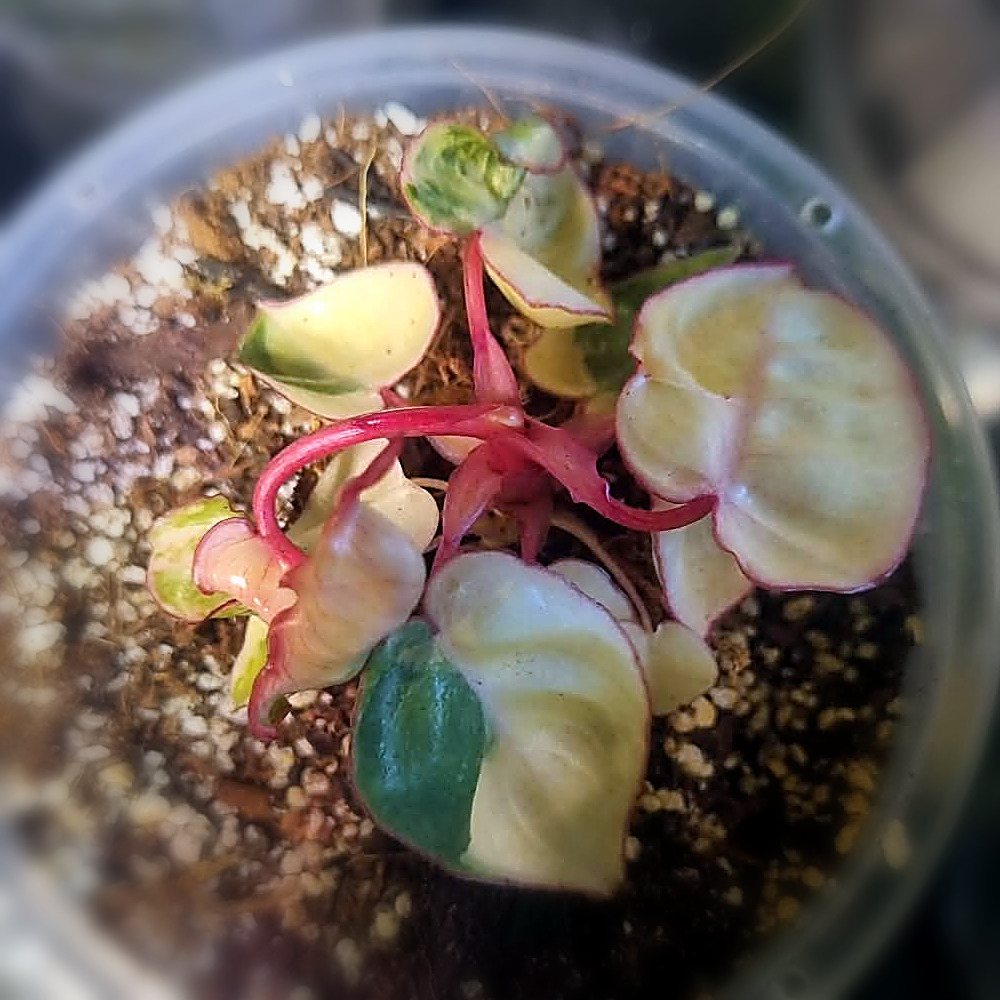
Philodendron 'Billietiae' Variegated
Philodendron billietiae 'Variegata'
TC plantlet from Thailand, deflasking / acclimatization
- Lighting
- 8/10
- Humidity
- 8/10
Progress (my photos)
Water group
Variegated
SensitivityHigh (due to the white areas)
Target pH6.0-6.3
PPM with fertilizer100-130
About this group →Lighting
Range, lux6000–15000
Optimal, lux10000
Photoperiod, h12-14
Direct sun✕
Humidity
High (mini-greenhouse for the acclimatization period)
Transparent box/ziploc, open gradually
With soft RO water
Watering
FrequencyModerate after rooting
MethodManual (PPM control)
Wick wateringNot recommended
Not recommended (PPM control needed)
Feeding group
Variegated aroids
Fertilizers & additives →Risks & warnings
- Reversion with excess nitrogen (loss of cream-yellow sectors)
- Fully white/yellow leaves without chlorophyll die — normal for a variegata
- Gel residue on the roots → mold/rot
- TC plantlets are fragile — losses during acclimatization are normal
Care notes
- •TC plantlet in gel (gellan gum) — not a finished plant, needs acclimatization
- •Billietiae — long arrow-shaped leaves on orange petioles; a variegata with cream-yellow sectors
- •Deflasking — carefully remove it and wash all the gel off the roots with warm RO water (leftovers = mold/rot)
- •Mini-greenhouse for 2-4 weeks with high humidity, then gradually open (harden off)
- •NO fertilizers for the first 3-4 weeks, then ¼ dose (canister V, low N)
- •Bright diffused light, no direct sun — light sectors burn more easily than green ones
- •Support (moss stick) for climbing growth and large mature leaves
- •After 2-3 new leaves — move to the adult airy mix for variegated aroids